

If you work in quality, you can feel it: the ground is shifting. What used to take weeks of audits, spreadsheets, and manual checks can now be completed in hours—or even seconds—with AI. But this isn’t about replacing seasoned quality professionals. It’s about giving them superpowers and transforming your Lean Six Sigma into the digital age.
From Reactive QA to Proactive QE
Traditional quality assurance finds defects after the fact. AI drives us toward proactive quality engineering—preventing defects, stabilizing processes, and optimizing the cost of quality across the lifecycle. Think: predicting the next defect before it happens, closing CAPAs more quickly, and transforming tribal knowledge into repeatable, auditable workflows.
For quality engineers, AI is a powerful tool for enhancing software quality across the entire development lifecycle.
- Automated and intelligent testing: AI can automatically generate, execute, and even “self-heal” test cases in response to code changes. This drastically reduces the time and effort spent on routine, manual testing tasks, such as regression testing.
- Shift from execution to strategy: With AI handling repetitive tests, human engineers can focus on higher-level strategic work. This includes designing comprehensive test plans, performing in-depth exploratory testing, and assessing user experience (UX), which AI struggles to understand fully.
- Predictive analytics: AI and machine learning algorithms can analyze historical defect data, code patterns, and user behavior to predict potential problem areas. This allows engineers to prioritize testing efforts on the riskiest components, catching bugs earlier in the development cycle.
- Focus on AI quality: A new and critical aspect of the role is testing the AI systems themselves for bias, transparency, and ethical boundaries.
How AI is Transforming Quality Technicians
AI is similarly affecting quality technician roles, particularly in the manufacturing and hardware fields, by automating visual inspections and quality control.
- Automated inspections: AI-powered computer vision and sensor technology enable the inspection of products with greater precision and consistency compared to manual inspections. This enables real-time quality monitoring on the production line, allowing defects, even microscopic ones, to be detected much faster.
- Predictive maintenance: AI systems can analyze data from production equipment to predict when machinery is likely to fail. Technicians can use these insights to perform proactive maintenance, preventing product defects and costly downtime before they occur.
- Shift from manual checks to oversight: The technician’s role is evolving from performing manual checks to managing and validating the AI systems that do the inspections. They will be responsible for defining the validation protocols and ensuring the accuracy and reliability of the automated systems.
The Future of Quality Jobs is Hybrid
The consensus is that human judgment and creativity will remain irreplaceable. The future of quality will rely on a collaborative, “human-in-the-loop” model, where professionals work alongside AI tools.
To stay relevant, quality professionals should focus on the following:
- Embrace automation: Develop skills in AI-driven automation tools and learn how to integrate them into workflows effectively.
- Enhance critical thinking by focusing on strategic problem-solving, risk assessment, and understanding complex user needs that AI cannot replicate.
- Learn to test AI: Gain the skills to effectively test and validate AI models for accuracy, bias, and reliability.
- Enhance soft skills: As AI handles more repetitive tasks, the ability to communicate complex issues, collaborate with cross-functional teams, and provide strategic insights will become increasingly valuable.
10 High-Impact AI Use Cases for Quality
Below are some practical ways in which AI is reshaping quality engineering today, with clear use cases that you can deploy in real factories, labs, and service operations.
1) AI-Assisted PFMEA & Control Plans

Large Language Models (LLMs) can mine past NCRs, audit notes, and maintenance logs to surface recurring failure modes and suggest severity/occurrence/detection (S/O/D) starting points. Result: faster, more complete PFMEAs and smarter control plans that reflect actual risk—not guesswork.
Result: 30–50% faster FMEA drafting, better alignment between control plans and real-world risks.
2) Computer Vision for Inline Inspection
High-res cameras + vision models = consistent, 24/7 inspection. Detect surface defects, edge chipping, solder voids, label misprints—even when they’re hard for the human eye to see at speed.
Result: Higher detection sensitivity, lower false negatives, traceable images linked to serial numbers.
3) Real-Time SPC With Anomaly Detection
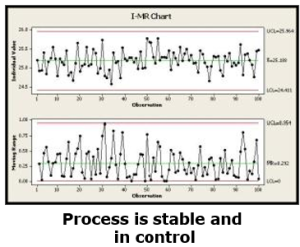
Stream sensor data through AI models (e.g., isolation forests, autoencoders) to catch subtle pattern shifts long before points breach traditional control limits. Flag drift, tool wear, or operator effects in minutes—not at the end of the shift.
Result: Early warning → fewer deviations, tighter Cpk, reduced scrap.
4) NLP to Triage Nonconformances & CAPAs
Natural-language models can read NC reports and automatically categorize root causes, suggest containment actions, and pre-fill 5-Why or fishbone templates. They also route CAPAs by risk, due dates, and workload.
Result: Cycle time decreased, closure rates increased, and better consistency across teams.
5) Digital Gemba Walks
Voice-to-text apps capture floor observations; an AI “coach” converts them into standard work updates, safety notes, and kaizen tickets. You get searchable, time-stamped evidence instead of sticky notes.
Result: Faster loop from observation → standardization.
6) Supplier Quality Risk Scoring
Blend delivery performance, COQ, audit findings, ESG/risk signals, and even public news. An AI risk score flags suppliers likely to slip before they do—so you can act early with development plans or dual sourcing.
Result: Fewer surprises, stronger incoming quality, better PPAP readiness.
7) Generative Work Instructions & Training
Upload photos or short video clips; AI drafts visual work instructions, highlights CTQs, and localizes content for different languages. Pair with quick quizzes that adapt to each operator’s learning curve.
Result: Faster onboarding, fewer interpretation errors, better standardization.
8) Predictive Maintenance Tied to CTQs
Connect vibration, temperature, power draw, and quality outcomes to forecast when a machine’s condition starts jeopardizing your CTQs. Maintenance becomes a quality lever—not just a downtime lever.
Result: More stable processes, fewer quality escapes due to tool wear.
9) COQ Analytics & Scenario Modeling
AI helps reconcile prevention, appraisal, and failure costs (internal + external) and runs “what-if” scenarios: What happens to COPQ if we tighten a control limit? Add an inline camera? Shift inspection to an earlier stage?
Result: Clear ROI narratives to justify quality investments.
10) Audit Prep Copilot (ISO 9001 / IATF / ISO 13485 / AS9100)

Ask: “Show records proving clause 8.7 effectiveness for the last two quarters.” The copilot assembles linked evidence—training records, calibration certs, NC logs, CAPA closures—into a neat package.
Result: Less scrambling, more confidence on audit day.
A Day in the Life: From Hourly Firefighting to Predictable Flow
- 7:30 AM – SPC dashboard pings: micro-drift on Line 2. The supervisor checks tool wear; a maintenance swap is scheduled at lunch, before parts drift out of specification.
- 10:15 AM – A minor NC is logged; AI pre-fills the 5-Why with patterns seen over the past three months. CAPA owner accepts, adds human context, and launches a quick trial.
- 2:00 PM – Supplier risk score spikes; SQE triggers a layered process audit and blocks a shipment until a containment plan is in place.
- 4:45 PM – The cost-of-quality board indicates that prevention spend is up and failure cost is down. The CFO smiles because scrap, rework, and warranty returns continue to trend downward.
Guardrails: Make AI Safe, Compliant, and Useful
- Data Quality First: Garbage in, garbage out. Start by standardizing data taxonomies (NC categories, defect codes, part IDs).
- Human-in-the-Loop: Keep engineers as final approvers for PFMEAs, control plans, and CAPAs. AI recommends; people decide.
- Validation & Traceability: Version models, lock prompts, and archive outputs. If it touches a regulated process, treat it like validated software.
- Privacy & Security: Mask PII, segment supplier/customer data, and implement role-based access.
- Change Control: AI-driven changes still need controlled trials, MOCs, and training updates.
Metrics That Matter
Tie your AI pilots to measurable outcomes:
- Quality: First-pass yield, ppm/ppb defects, Cpk/Cmk, warranty/returns.
- Speed: NC → CAPA closure time, audit prep hours, time-to-train.
- Cost: Scrap/rework, cost of poor quality, inspection cost per unit.
- Stability: Unplanned downtime, drift detections caught pre-spec breach.
30–60–90 Day Roadmap (Practical & Doable)
Days 0–30: Discover & Prepare
- Pick one product family or line; define 2–3 KPIs and a target delta (e.g., −25% NC closure time).
- Clean and label 6–12 months of NCs, SPC, and maintenance data.
- Stand up a lightweight data pipeline (CSV → database is fine to start).
Days 31–60: Pilot & Validate
- Pilot two use cases (e.g., anomaly detection + CAPA triage).
- Run in “advisory mode” (no auto-actions) and compare to human results.
- Hold weekly reviews; adjust thresholds, prompts, and guardrails.
Days 61–90: Integrate & Scale
- Connect to your eQMS/MES for seamless evidence and traceability.
- Document SOPs, training, and change control.
- Present a hard-number ROI and a scale-up plan (people, process, tech).
Common Pitfalls (and How to Dodge Them)
- Boiling the ocean: Start with one line, one metric, two use cases.
- Tool sprawl: Favor interoperable tools and clear data ownership.
- Black boxes: Select models that can be easily explained to auditors and operators.
- No ownership: Assign a product owner in Quality with IT/OT as partners.
- Ignoring frontline wisdom: Operators spot edge cases early—loop them in.
Where Bizmasterz Fits
We’ve helped manufacturers and service organizations integrate Lean Six Sigma discipline with applied AI—without derailing production or overwhelming them with platforms. Typical engagements:
- AI Readiness & Data Health Check (2–3 weeks)
- Focused Pilot (SPC anomaly detection or CAPA triage)
- Audit-Ready Integration with your eQMS/MES and SOPs
- Capability Building: training for QE, SQE, and ops leaders
If you want to cut scrap, shorten CAPA cycles, and walk into audits with confidence—while building a durable quality culture—let’s talk.
Final Thoughts
No, AI is not expected to make quality engineers and technicians obsolete. Instead, it is transforming these roles by automating repetitive tasks and augmenting human capabilities. Professionals who adapt and gain new skills in working with AI will be more valuable and productive than those who resist the change.
AI won’t replace your quality team. But the teams that learn to wield it will outperform those that don’t. Start small, learn fast, and make quality your competitive advantage.
Want a no-pressure brainstorming call about where to start?
Reach out to Bizmasterz—let’s map a pilot you can stand up in 60 days.


