

Most organizations striving for quality management utilize ISO 9001 standards, emphasizing statistical techniques’ importance in maintaining product and service excellence. You will discover how these techniques enable you to analyze processes, measure performance, and identify areas for improvement.
By effectively applying data-driven methods, you enhance your decision-making capabilities and ensure compliance with ISO standards. This ultimately leads to increased customer satisfaction and reduced operational risks. Understanding these statistical tools is crucial for achieving and sustaining ISO 9001 certification.
Key Takeaways:
- Quality Improvement: Statistical techniques help organizations identify areas for improvement, track performance, and enhance overall quality in accordance with ISO 9001 standards.
- Data-Driven Decision Making: Utilizing statistical analysis allows businesses to make informed decisions based on reliable data, which aligns with the ISO 9001 focus on continuous improvement.
- Process Control: Implementing statistical methods aids in monitoring and controlling processes, ensuring they remain within desired limits and contribute to consistent product quality.
Overview of ISO 9001
Your understanding of ISO 9001 is crucial for implementing an effective quality management system. This international standard outlines the criteria for building a framework that helps organizations consistently meet customer requirements and enhance satisfaction. Adhering to ISO 9001 enables your organization to streamline processes, reduce waste, and foster continual improvement, thus driving overall success.
Principles of ISO 9001
An overview of ISO 9001’s principles reveals that they serve as the foundation for effective quality management. These principles include customer focus, leadership, engagement of people, process approach, improvement, evidence-based decision-making, relationship management, and a system approach to management. Applying these principles creates a sustainable framework that supports quality and organizational excellence.
Importance of Quality Management Systems
Quality management systems (QMS) are vital for organizational success. They establish a structured approach to managing processes, ensuring you consistently meet compliance and customer expectations.
For instance, by implementing ISO 9001, you can achieve higher customer satisfaction through consistent product and service quality. This leads to a reduction in errors and cost savings from rework or recalls. Furthermore, a robust QMS fosters a culture of continuous improvement, empowering your team to identify and address inefficiencies. Neglecting quality management can result in significant risks, such as poor reputation, financial loss, and business failure.
Statistical Techniques Defined
You will find that statistical techniques are vital tools for analyzing and interpreting data, helping organizations make informed decisions. These techniques provide a framework for understanding trends, patterns, and relationships in data, ensuring you can effectively assess and improve processes within your ISO 9001 quality management system.
Types of Statistical Techniques
In ISO 9001, you will encounter various statistical techniques, which include:
- Descriptive statistics – Summarizes data sets
- Inferential statistics – Concludes sample data
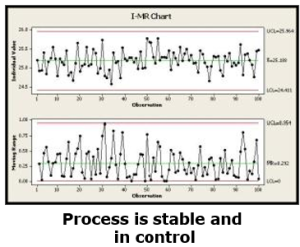
- Control charts – Monitors process stability
- Process capability analysis – Evaluates process performance
- Hypothesis testing – Tests assumptions about populations
After familiarizing yourself with these techniques, you will be better equipped to implement quality improvements effectively.
| Technique | Purpose |
| Descriptive Statistics | Simplifies data for understanding |
| Inferential Statistics | Infers conclusions from samples |
| Control Charts | Monitors and controls processes |
| Process Capability Analysis | Assesses process effectiveness |
| Hypothesis Testing | Tests and validates assumptions |
Relevance of Statistics in Quality Management
To ensure that your quality management system is effective, you rely on statistics to inform your decisions and drive improvements. By leveraging statistical methods, you can identify areas for enhancement, enabling consistent quality outputs.
Statistics are pivotal in guiding quality management decisions, allowing you to uncover trends and pinpoint process inefficiencies. Utilizing statistical tools reduces the risk of errors and enhances decision-making through data-driven insights. Furthermore, statistics facilitate monitoring process performance and customer satisfaction, ensuring that your organization consistently meets quality standards. Integrating these techniques safeguards your reputation and product quality, ultimately leading to long-term success.
Data Collection Methods
Unlike anecdotal evidence, data collection methods in ISO 9001 focus on systematic approaches to gather information that supports the quality management system. Effective data collection ensures that you make informed decisions based on relevant data, enabling your organization to demonstrate accountability, assess performance, and identify areas for improvement.
Quantitative vs Qualitative Data
Qualitative data involves non-numerical information that reflects the quality of a phenomenon, such as customer feedback or employee insights. In contrast, quantitative data consists of measurable values, like production statistics or defect rates, allowing you to perform statistical analysis for comparison and trend identification.
Tools and Techniques for Data Collection
Various tools and techniques can be employed for effective data collection, including surveys, interviews, focus groups, and observation. Each method serves different purposes, depending on the type of data you need to gather and the objectives of your quality management system.
Utilizing the right tools and techniques is necessary for reliable data collection. Surveys allow you to gather large amounts of quantitative data efficiently, while interviews can yield valuable qualitative insights. Make sure to utilize focus groups to explore consensus opinions and behaviors deeper and consider observation methods for a firsthand look at processes in action. This multifaceted approach empowers you to comprehensively understand your organization’s performance, ultimately improving decision-making.
Statistical Analysis in ISO 9001
Once again, statistical analysis plays a pivotal role in the implementation and effectiveness of ISO 9001. Organizations can monitor and measure their processes by employing various statistical methods, ensuring they adhere to the established quality standards. This not only aids in identifying areas for improvement but also fosters a culture of data-driven decision-making. Utilizing statistical techniques enhances your ability to achieve consistent quality, ultimately leading to higher customer satisfaction.
Descriptive Statistics
Statistical techniques encompass descriptive statistics, which summarize and describe the main features of your data. You can efficiently communicate key insights about your quality processes using the mean, median, mode, and standard deviation measures. This lays a foundation for better understanding your performance metrics and assists in monitoring variations over time, enabling you to improve your ISO 9001 processes continuously.
Inferential Statistics
One powerful aspect of statistical analysis in ISO 9001 is inferential statistics, which allows you to make predictions and generalizations about a population based on sample data. This method is particularly beneficial for assessing the quality of your processes and making informed decisions without needing to evaluate every single piece of data.
Analysis of inferential statistics is crucial for your organization’s quality management. Using confidence intervals and hypothesis testing, you can draw meaningful conclusions from your data samples. This is especially important for identifying potential risks and areas of non-compliance with ISO 9001 requirements. By interpreting data correctly, you can implement targeted actions that enhance your quality management systems, ensuring sustained improvement and customer satisfaction.
Implementing Statistical Process Control

For effective quality management, you must implement Statistical Process Control (SPC) to monitor and control your processes. SPC helps you identify variations and allows proactive adjustments to maintain quality standards. Integrating SPC within your ISO 9001 framework empowers your organization to make data-driven decisions that enhance efficiency and product quality.
Control Charts
Statistical control charts are imperative tools within SPC that enable you to visualize process performance over time. Plotting data points against predetermined control limits allows you to identify trends, shifts, or unusual variations easily. This empowers you to take corrective actions promptly, ensuring consistency and compliance with your quality objectives.
Process Capability Analysis
Control of your processes is crucial for meeting customer expectations, and Process Capability Analysis allows you to measure how well your processes perform against specifications. This analysis helps determine whether your processes can consistently produce products within established limits. Utilizing this analysis ensures that your operations align with ISO 9001 standards, ultimately enhancing customer satisfaction.
Process capability analysis measures your processes’ ability to produce output that meets specifications. During this evaluation, you’ll calculate indices such as Cp and Cpk, highlighting your processes’ capability to produce quality outputs. Understanding these figures is vital as it enables you to identify possible weaknesses in your processes, allowing you to implement targeted improvements. By addressing these areas, you not only mitigate risks of nonconformance but also strengthen your overall quality management system. Ultimately, this assessment fosters a culture of continuous improvement, ensuring your processes consistently meet both customer and regulatory requirements.
Continuous Improvement through Statistical Techniques
All businesses striving for excellence can enhance their processes through effective statistical techniques. Implementing these methods aids in decision-making, ensuring continuous improvement and compliance with ISO 9001 standards. Exploring Using Statistical Techniques in Accordance with ISO 10017 will uncover valuable insights contributing to quality management and organizational growth.
Root Cause Analysis
Understanding the root causes of defects or issues is crucial for any quality management system. Employing statistical techniques allows you to identify the underlying problems, enabling targeted solutions rather than just treating symptoms. This analytical approach leads to more sustainable improvements in processes and products.
Six Sigma and Other Methodologies
Statistical methods are integral to Six Sigma and other quality improvement methodologies. By providing a structured framework, you can leverage data to minimize variations and enhance efficiency in your operations. Techniques like DMAIC (Define, Measure, Analyze, Improve, Control) not only streamline processes but also foster a culture of continuous improvement.
Six Sigma techniques emphasize the importance of data-driven decision-making. With tools like process mapping, control charts, and hypothesis testing, you can effectively identify and eliminate waste while ensuring your processes meet customer expectations. The emphasis on statistical analysis and performance metrics means you can make informed decisions that positively impact quality and efficiency, leading to long-lasting enhancements in your operations.
Conclusion
Understanding how statistical techniques are incorporated into ISO 9001 enhances your organization’s quality management system. By utilizing data-driven approaches, you can identify trends, improve processes, and make informed decisions, ultimately leading to higher customer satisfaction. Embracing these techniques not only streamlines operations but also fosters a culture of continuous improvement, ensuring your organization meets compliance and quality objectives effectively.
FAQ
Q: What role do statistical techniques play in the ISO 9001 quality management system?
A: Statistical techniques are imperative in ISO 9001 as they assist organizations in measuring and analyzing data to improve their processes and products. By employing these techniques, companies can identify trends, potential areas of risk, and guidelines for maintaining consistent quality. Statistical methods such as control charts, process capability analysis, and sampling techniques enable organizations to make data-driven decisions, fostering continuous improvement per the ISO 9001 standards.
Q: How can organizations implement statistical techniques for process improvement in ISO 9001?
A: Organizations can implement statistical techniques in their ISO 9001 processes by first identifying key performance indicators (KPIs) that align with their quality objectives. Once KPIs are established, tools such as Six Sigma, quality control charts, and Pareto analysis can be deployed to analyze process performance and identify areas for improvement. By regularly monitoring and evaluating data, organizations can implement corrective and preventive measures that improve quality outcomes and compliance with ISO 9001 standards.
Q: What common statistical tools are used in conjunction with ISO 9001?
A: Several statistical tools commonly used in ISO 9001 include: 1. Control Charts: To monitor process stability and variation over time. 2. Process Capability Analysis: To evaluate if a process can produce products that meet specifications. 3. Histogram: To visualize data distribution and understand its characteristics. 4. Statistical Sampling: To make decisions about quality based on a subset of products or processes rather than inspecting every item. 5. Pareto Analysis: To identify the most significant factors affecting quality and prioritize improvement efforts. These tools help organizations ensure compliance with ISO 9001 and enhance overall quality management practices.


