

Integrating advanced quality techniques that refine your processes and outcomes can significantly improve your product quality planning. Implementing these strategies enables you to identify defects early, reduce waste, and ensure compliance with industry standards.
By leveraging tools such as Six Sigma, Total Quality Management, and Statistical Process Control, you can enhance the quality of your products and overall operational efficiency. Don’t leave your product quality to chance—discover how these innovative techniques can safeguard your brand and elevate your market position.
Key Advanced Quality Techniques Takeaways
- Increased Efficiency: Implementing advanced quality techniques can streamline product quality planning processes, reducing waste and time spent on revisions.
- Enhanced Customer Satisfaction: By focusing on quality from the planning stage, businesses can better meet customer expectations and requirements, leading to higher satisfaction rates.
- Data-Driven Decision Making: Advanced quality techniques allow for the analysis of data trends, empowering teams to make informed decisions about product improvements and quality standards.
Understanding Quality Planning

A well-constructed quality planning process is the backbone of your product development strategy. It encompasses all activities that define quality objectives and establish the necessary actions to meet them. Quality planning helps ensure that the final output aligns with customer expectations and regulatory requirements by outlining the criteria and standards that your product must meet. To succeed in your venture, a concise yet comprehensive quality plan defines what you want to achieve and specifies how you intend to get there.
Defining Quality Planning
On a fundamental level, quality planning involves identifying your quality requirements and deciding how to fulfill them. This step includes setting quality goals and determining the responsibilities and resources you’ll need. By developing a quality plan that lays out these components, you position yourself to proactively address any areas that may fail to meet standards, reducing the risk of issues arising during the later stages of product development.
Importance of Quality Planning in Product Development
Quality in product development is not merely an afterthought; it’s woven into the very fabric of your project. Quality planning is crucial as it helps you identify potential challenges early on and facilitates the seamless integration of quality metrics throughout development. This proactive approach helps minimize costly late-stage changes and bolsters customer satisfaction by ensuring their needs are met from the get-go.
Plus, robust quality planning translates to increased efficiency and reduced waste, allowing you to allocate resources more effectively. With a clear quality framework in place, you can identify areas for improvement and focus on the most important aspects.
This systematic approach enhances your product’s market viability and cultivates a quality culture within your organization, ultimately leading to more consistent and positive outcomes. Neglecting quality planning, on the other hand, can expose you to significant risks—potentially leading to product failures, financial losses, and damage to your brand reputation.
Why Advanced Quality Planning Matters for Industrial Intelligence
Advanced quality techniques are not only quality tools. They are the foundation for Industrial Intelligence because they help manufacturers convert customer requirements, process risks, product requirements, variation data, and improvement evidence into better decisions.
Before AI, dashboards, analytics, or smart factory systems can improve product quality, the organization must understand what customers require, how the product or process can fail, which controls are needed, how variation will be monitored, and how learning will be fed back into design and production.
QFD, FMEA, SPC, DFSS, DOE, root cause analysis, and Lean methods create the structured evidence that AI-enabled quality systems need to support better planning, launch readiness, CAPA, process control, and continuous improvement.
Overview of Advanced Quality Techniques
Advanced quality techniques are vital tools that help you enhance your product quality planning by identifying potential issues before they escalate into major problems. Implementing these techniques ensures your product meets the required standards, increasing customer satisfaction and loyalty. These methodologies streamline processes and cultivate a culture of continuous improvement within your organization.
- Facilitates proactive quality management.
- Encourages team collaboration and communication.
- Reduces waste and operational costs.
- Enhances decision-making through data analysis.
- Promotes customer-centric designs.
| Advanced Quality Techniques | Description |
|---|---|
| FMEA (Failure Mode and Effects Analysis) | A systematic way to evaluate processes to identify where and how they might fail and assess the relative impact of different failures. |
| Six Sigma | A disciplined, data-driven approach for eliminating defects and improving processes. |
| Statistical Process Control (SPC) | A method of quality control that employs statistical methods to monitor and control a process. |
Advanced Quality Techniques as Product and Process Evidence
Product quality planning improves when quality methods are treated as connected evidence, not isolated tools. Each technique contributes a different type of decision support.
- QFD translates customer needs into technical and design requirements.
- FMEA identifies potential failure modes, effects, causes, and controls.
- SPC monitors variation and process stability over time.
- DFSS builds customer requirements and statistical thinking into design decisions.
- DOE helps teams understand which factors influence performance.
- Root cause analysis investigates actual failures and recurring problems.
- Lean methods expose waste, flow problems, handoffs, and process delays.
When this evidence is connected, quality planning becomes more than a launch checklist. It becomes a decision system for designing, producing, controlling, and improving products.
Advanced Quality Techniques and Industrial Intelligence
| Technique | Traditional quality-planning role | Industrial Intelligence value |
|---|---|---|
| QFD | Translate customer needs into technical requirements | Connects voice-of-customer evidence to product, process, and design decisions |
| FMEA | Identify and prioritize potential failure modes | Creates structured risk evidence for launch readiness, CAPA, audits, and AI-supported investigation |
| SPC | Monitor process variation and stability | Provides variation signals that can trigger investigation, escalation, or corrective action |
| DFSS | Design quality into the product from the beginning | Connects design decisions to customer requirements, reliability, manufacturability, and future performance evidence |
| DOE | Test how input factors affect product or process performance | Supports model-based learning, optimization, and evidence-based process settings |
| Root cause analysis | Identify the cause of actual quality problems | Connects quality events, process evidence, CAPA, and organizational learning |
| Value stream mapping | Identify flow, waste, and process delays | Shows where evidence, decisions, handoffs, and workflow constraints affect performance |
Definition and Scope of Advanced Quality Techniques
Any organization looking to improve its product quality must first understand the definition and scope of advanced quality techniques. These techniques encompass a range of methodologies designed to identify, measure, analyze, and improve quality processes. By employing these approaches, you can effectively minimize risks associated with product failures, ensuring that you meet regulatory requirements and customer expectations.
Advanced quality techniques extend beyond mere compliance; they foster a proactive mindset geared toward anticipating quality-related challenges. By integrating these techniques into your quality planning, you equip yourself with the tools necessary to drive significant improvements in your products and processes, reflecting a strong commitment to excellence.
- Encourages a shift from reactive to proactive quality management.
- Transforms data insights into actionable plans.
- Expands your quality management toolkit.
- Aligns organizational objectives with quality initiatives.
- Enhances stakeholder confidence in your products.
| Definition and Scope | Details |
|---|---|
| Proactive Quality Management | Focuses on preventing defects rather than detecting them. |
| Data Analysis | Utilizes statistical methods to make informed decisions. |
| Organizational Alignment | Integrates quality objectives at all levels of the organization. |
Key Advanced Quality Techniques in Practice
The quality management landscape continues to evolve, and several key advanced quality techniques are impacting practice. These techniques enable you to identify potential process deviations, allowing you to adapt and enhance your quality strategies. Implementing these methodologies results in a paradigm shift in how quality is viewed within your organization, emphasizing continuous improvement.
These techniques not only focus on achieving immediate goals, but they also emphasize long-term sustainability within your processes. With a strong foundation in addressing the root causes of quality issues, you can foster an environment of innovation and dependability, ensuring that your products are consistently above industry standards.
- Root Cause Analysis.
- Value Stream Mapping.
- Design of Experiments (DoE).
- Lean Manufacturing techniques.
- Quality Function Deployment (QFD).
| Key Techniques | Description |
|---|---|
| Root Cause Analysis | A method used to identify the fundamental cause of defects or problems. |
| Value Stream Mapping | A visual tool that helps you understand the flow of materials and information. |
| Design of Experiments (DoE) | A statistical approach for planning, conducting, and analyzing controlled tests. |
The scope for advancing your quality planning remains vast, and the successful application of these advanced quality techniques can lead to improved productivity, reduced costs, and, most importantly, greater customer satisfaction. By continuously leveraging these methodologies, you enhance your organization’s capabilities and position yourself as a leader in quality management. Stay informed about the latest practices and be prepared to adapt, ensuring your products meet and exceed standards.
The Role of Quality Function Deployment (QFD)
Not all quality improvement methods are created equal, and Quality Function Deployment (QFD) stands out as a strategic tool that enhances product quality planning.
Understanding the QFD Framework
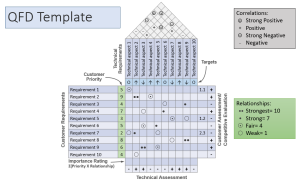
The QFD framework serves as a structured approach for translating customer requirements into detailed specifications for products and services. It effectively captures the voice of the customer by creating a visual representation of how various product attributes relate to customer needs, ensuring your team understands what is vital to your target audience. Using QFD, you don’t merely react to customer feedback; instead, you proactively design your product around it, significantly elevating your quality planning process.
The fundamental component of the QFD process is the House of Quality, a concise matrix that links customer desires with technical requirements. This framework enables your team to prioritize features based on their importance to the customer, allowing for more focused resource allocation during development. With this structured format, you gain a clearer roadmap for product development, making it easier to identify potential issues before they arise and ensuring your final product resonates with your consumers.
Benefits of Implementing QFD in Product Quality Planning
For those committed to enhancing their product quality, incorporating QFD into your planning can yield substantial benefits. First and foremost, QFD helps streamline communication between departments, breaking down silos that can hinder effective product development. When you align your engineering, marketing, and manufacturing teams under one common goal—addressing customer needs—you foster a culture of collaboration that is vital for quality improvement. Moreover, QFD minimizes the risk of rework by addressing potential problems during the planning stages, which can save time and resources down the line.
Adopting QFD equips you to swiftly adapt your product to changing market demands. By continually referring to the QFD matrix, you can ensure that any iterations of your product reflect not only the latest customer feedback but also align with emerging trends. This flexible approach lets you stay ahead of competitors, positioning your product as a customer-centric solution. Overall, implementing QFD in your product quality planning enhances your customer relationship and drives operational efficiencies that can lead to increased market share and profitability.
Utilizing Failure Mode and Effects Analysis (FMEA)

Many organizations seeking to enhance their product quality planning can greatly benefit from implementing Failure Mode and Effects Analysis (FMEA). This systematic approach allows you to identify potential failures within your processes or products and evaluate how these failures could impact functionality and customer satisfaction. By engaging in this proactive analysis, you set the groundwork for developing robust quality assurance strategies, reducing risks, and ultimately enhancing the reliability of your products.
Identifying Potential Failures
Failures can occur at various stages of a product’s lifecycle. By methodically dissecting your product design and processes, you can uncover potential failure modes that may go unnoticed without a structured framework like FMEA. This involves considering every component and process step, from design to delivery, and determining what could fail— a material defect, a design flaw, or a manufacturing error. This comprehensive approach enables you to prioritize the most critical areas that could compromise your product’s performance or safety.
Prioritizing Risks for Effective Mitigation
For effective mitigation, you must utilize the information from the potential failure identification phase. This is where the Risk Priority Number (RPN) comes into play. It combines the likelihood of failure occurrence, the severity of its effects, and the ability to detect it before it reaches the customer. By calculating the RPN, you can rank the identified risks and focus your resources on addressing the most significant issues, optimizing your quality enhancement efforts.
For instance, if a particular failure mode has a high RPN, it signifies a significant risk to the product and, consequently, to your customers. By prioritizing such risks, you can implement targeted corrective actions, allocate resources effectively, and address potential failures before they impact your product quality. This focused approach allows you to save time and resources while enhancing overall product reliability and customer satisfaction.
Incorporating Statistical Process Control (SPC)
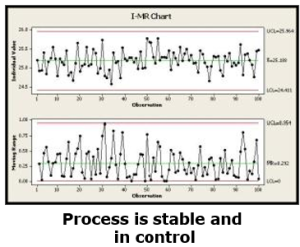
Incorporating Statistical Process Control (SPC) can be a game-changer for those aiming to boost product quality planning. SPC is a method of monitoring and controlling a process through statistical techniques; it allows you to understand your production processes better by identifying variations that may occur during manufacture.
By utilizing SPC, you can proactively address issues before they escalate, ultimately leading to superior product quality. This technique is not limited to identifying problems; it is also fundamental to establishing a baseline for your quality standards, allowing you to implement continuous improvements.
Overview of Statistical Methods in Quality Control
Understanding the various statistical methods in quality control is crucial for enhancing product quality. These methods incorporate tools such as control charts, process capability analysis, and experiment design. Control charts, in particular, help you visualize the performance of your processes over time, allowing you to detect trends or shifts that require your immediate attention. Additionally, process capability analysis gives you insight into how well your products meet specifications, enabling informed decision-making and process adjustments when necessary.
Continuous Monitoring for Enhancements
Any effort to improve quality must include a framework for continuous monitoring. SPC facilitates ongoing observation and analysis of your processes, ensuring any variations are quickly identified and addressed. Adopting this proactive approach fosters a quality culture within your organization, ultimately reshaping how you perceive and manage product quality. Continuous monitoring optimizes resource allocation, as you can align your operational focus toward areas requiring immediate attention or improvement.
Enhancing your processes is paramount, and ensuring effective continuous monitoring requires a systematic approach to quality surveillance. This could involve training your team to recognize the key performance indicators (KPIs) and applying the necessary statistical tools to analyze process data effectively. Moreover, by regularly reviewing your control charts and process capabilities, you can make informed adjustments that lead to *significant reductions in defects* and *increased customer satisfaction*. By prioritizing this ongoing evaluation, you not only improve your product’s quality but also strengthen your business’s overall competitive advantage.
Leveraging Design for Six Sigma (DFSS)
Unlike traditional product development methodologies that prioritize speed or cost over quality, Design for Six Sigma (DFSS) emphasizes a structured approach to achieving optimal quality from the beginning of your product design process. By integrating quality into the product design phase, you can ensure that your items meet and exceed customer expectations. Doing so minimizes the risk of costly defects and rework later in the production cycle, providing a solid foundation for sustainable business growth.
Principles of Design for Six Sigma
The principles of DFSS revolve around understanding customer needs and translating them into feasible and efficient product specifications. This process involves identifying key performance metrics, conducting rigorous analyses of potential risks, and employing advanced statistical methods to optimize design outcomes. As a result, you can create products that satisfy the customer while aligning with your organization’s operational capabilities. Moreover, DFSS encourages an iterative design approach, allowing for ongoing assessment and flexibility in adapting to change.
Enhancing Product and Process Reliability
DFSS enhances product and process reliability by systematically emphasizing design excellence. By meeting strict quality standards in the design phase, you can develop products that are less prone to failure and are more aligned with user needs. This methodology fosters greater innovation, empowering you to explore creative solutions that effectively address customer pain points while ensuring reliability.
A critical aspect of DFSS is its ability to use quantitative data to drive design choices. By leveraging statistical analyses and structured methodologies such as Voice of the Customer (VOC), Failure Mode and Effect Analysis (FMEA), and Design of Experiments (DOE), you are equipped to anticipate potential issues before they arise. This proactive mindset boosts your product reliability and significantly reduces the likelihood of defects, ultimately fostering a strong reputation for quality that can enhance your market position.
Integrating Customer Feedback and Quality Metrics
Incorporating customer feedback and quality metrics can greatly benefit your product quality planning strategy. By marrying these two elements, you can gain comprehensive insights into your product’s performance in real-world scenarios while assessing your internal quality processes. This integration enables you to identify gaps, set actionable objectives, and implement targeted improvements, ultimately leading to a higher-quality product that meets customer expectations.
The Importance of Voice of the Customer (VoC)

Quality starts with understanding what your customers want and need. The Voice of the Customer (VoC) is a structured approach that captures customer preferences, aversions, and expectations.
By actively listening to your customers—through surveys, focus groups, or feedback forms—you gain valuable insights that can help shape your product’s features and enhancements. Ignoring proper channels for capturing VoC may lead to misalignment between your offer and your customers’ desires, undermining your product’s competitive advantage.
Furthermore, the feedback obtained from VoC initiatives can help prioritize quality improvements. When you track and analyze this feedback alongside other quality metrics, you can identify specific areas that require immediate attention or where minor changes could yield significant customer satisfaction gains. Doing so ensures that your quality planning remains dynamic, responsive, and customer-centered, giving you an edge in today’s competitive marketplace.
Utilizing Quality Metrics for Continuous Improvement
Customer feedback is not the only crucial component in enhancing product quality planning; quality metrics also play a pivotal role. Constantly measuring and analyzing relevant metrics—such as defect rates, return rates, and customer satisfaction scores—provides a quantitative basis for assessing product quality. By analyzing these metrics regularly, you can identify trends that may indicate emerging problems and areas of excellence within your production processes.
To maximize the effectiveness of your quality planning, establish a feedback loop where customer insights and quality metrics continuously inform one another. This involves routinely calibrating your quality metrics based on real customer data, enabling you to pivot your strategy quickly in response to their needs. Doing so sets a foundation for continuous improvement, fostering adherence to standards and a culture of excellence that permeates your organization. In this way, you ensure that your product aligns with customer expectations, leading to increased loyalty and market success.
How AI Can Support Advanced Product Quality Planning
AI should not replace quality engineers, design teams, process owners, or launch teams. However, AI can help strengthen product quality planning by retrieving evidence, identifying patterns, comparing prior launches, and flagging gaps between requirements, risks, controls, and performance data.
Examples of AI-supported quality planning include:
- Retrieving prior complaints, nonconformances, audit findings, and CAPA records for similar products or processes
- Comparing QFD customer requirements with design requirements, test plans, and process controls
- Flagging FMEA failure modes that are not reflected in the control plan
- Identifying weak detection controls or missing prevention controls
- Comparing SPC trends with process risks and capability targets
- Summarizing launch-readiness evidence for management review
- Recommending where DOE or additional validation may be needed
- Connecting production issues back to planning assumptions
The goal is not automated product quality planning. The goal is better evidence, stronger risk thinking, faster learning, and more reliable launch decisions.
From Quality Planning to Launch Readiness
Advanced quality techniques become most valuable when they are connected to launch readiness. A product should not move into production simply because documents are completed. The organization should be able to show that customer requirements, design risks, process risks, controls, inspection methods, supplier inputs, and production capability are aligned.
Useful launch-readiness questions include:
- Have customer requirements been translated into measurable design and process requirements?
- Are high-risk failure modes identified and controlled?
- Do control plans match FMEA risks?
- Are inspection and test methods capable?
- Is process variation understood and monitored?
- Have DOE, validation, or capability studies been completed where needed?
- Are supplier risks and material inputs included in quality planning?
- Are lessons from prior products, defects, and CAPA records reflected in the plan?
- Is there evidence that the process can produce conforming output repeatedly?
From Quality Planning to the Industrial Decision Loop
| Decision-loop stage | Quality planning example |
|---|---|
| Signal | A customer requirement, risk, defect trend, process variation, or launch concern appears. |
| Context | The signal is connected to QFD, FMEA, SPC, DOE, control plans, supplier inputs, and production history. |
| Interpretation | The team determines whether the issue is a design risk, process risk, measurement issue, supplier issue, or control gap. |
| Decision | Quality, engineering, operations, and leadership decide whether to revise requirements, improve controls, run experiments, delay launch, or open CAPA. |
| Workflow | Actions are executed through design updates, process changes, supplier action, validation, control-plan updates, training, or audit focus. |
| Outcome | Quality, capability, defects, complaints, launch performance, and cost of poor quality are monitored. |
| Learning | Lessons are fed back into future QFD, FMEA, DFSS, control plans, and quality planning standards. |
Why AI Cannot Fix Weak Quality Planning
AI can help analyze quality evidence, but it cannot compensate for weak planning discipline. If customer requirements are vague, FMEA is generic, control plans are disconnected from process risks, SPC is not used consistently, or lessons from prior launches are ignored, AI may only summarize weak evidence faster.
Before applying AI to product quality planning, manufacturers should make sure their quality methods are specific, current, cross-functional, evidence-based, and linked to real operating performance.
Advanced Quality Planning Readiness Checklist
- Customer requirements are clearly defined and measurable.
- QFD or a similar method translates customer needs into technical requirements.
- FMEA identifies product and process risks before launch.
- Control plans reflect high-risk failure modes and customer requirements.
- SPC or capability studies are used where process variation matters.
- DOE or validation is used for critical process factors when needed.
- Supplier risks and material inputs are included in planning.
- Inspection and measurement systems are capable.
- Lessons from prior nonconformances, complaints, and CAPA records are reviewed.
- Launch readiness is based on evidence, not only document completion.
- Quality planning outputs feed future audits, CAPA, and improvement work.
Advanced Quality Techniques
Integrating advanced quality techniques into product quality planning can significantly elevate product performance and customer satisfaction. Leveraging methodologies like Six Sigma, Total Quality Management, and Design for Quality ensures that every stage of the product lifecycle is meticulously focused on quality. This proactive approach minimizes defects and inconsistencies and fosters a culture of continuous improvement within your organization. Adopting these techniques allows you to meet customer demands better while optimizing costs and resources, positioning your business for long-term success in a competitive landscape.
Furthermore, by implementing advanced quality techniques, you empower your team to make data-driven decisions that lead to smarter planning and execution. With tools such as root cause analysis and statistical process control, you can identify issues before they escalate, ensuring your products consistently meet the highest standards. As you align your quality planning with these advanced methodologies, you enhance the reliability and appeal of your products and build a reputation for excellence that can lead to higher customer loyalty and market share. Embracing this shift will lead you toward sustained growth and innovation in your industry.
FAQ
Q: What are advanced quality techniques, and how do they differ from traditional quality methods?
A: Advanced quality techniques, such as Six Sigma, Total Quality Management (TQM), and Lean methodologies, focus on data-driven decision-making and continuous improvement. Unlike traditional quality methods that often rely on inspection and testing to ensure product quality post-production, advanced techniques emphasize proactive measures, process optimization, and customer satisfaction throughout the product development lifecycle. This approach helps to identify and eliminate defects early on, leading to higher-quality outcomes.
Q: How can implementing these techniques improve product quality planning?
A: Implementing advanced quality techniques in product quality planning leads to a more structured and systematic approach to quality assurance. These methodologies facilitate comprehensive risk assessments, streamline processes, and empower teams to leverage statistical analysis to predict and mitigate potential quality issues. By incorporating these techniques, organizations can create robust quality plans that address customer needs more effectively, reduce waste, and enhance overall product performance.
Q: Can advanced quality techniques help in managing supplier quality?
A: Absolutely! Advanced quality techniques can significantly enhance supplier quality management by establishing clear expectations and metrics through stringent supplier assessments, qualification processes, and continuous monitoring. Techniques such as Quality Function Deployment (QFD) can help align customer requirements with supplier capabilities, ensuring that components and materials meet the necessary standards. Furthermore, ongoing collaboration with suppliers using methods like Lean and TQM fosters a culture of continuous improvement, helping to maintain high-quality supply chains.
Q: What role does training play in successfully applying advanced quality techniques to product planning?
A: Training is critical when applying advanced quality techniques to product quality planning. Team members must understand the principles, tools, and associated practices for these methods to be effective. Training programs, workshops, and continuous education initiatives ensure that staff is equipped with the necessary skills to implement these techniques effectively. This investment in human capital reinforces a culture of quality within the organization, enhances employee engagement, and empowers them to contribute actively to quality improvements.
Q: What are some common challenges when incorporating advanced quality techniques, and how can they be overcome?
A: Some common challenges include resistance to change, inadequate training, and a lack of management support. To overcome these obstacles, it is vital to foster a culture of quality and continuous improvement by obtaining buy-in from all levels of the organization. Clear communication about the benefits of advanced quality techniques and comprehensive training can help alleviate resistance. Additionally, strong leadership commitment is crucial in allocating necessary resources and support to implement these techniques effectively, ensuring their successful integration into product quality planning.
Q: Need Stronger Product Quality Planning?
A: Bizmasterz helps manufacturers strengthen APQP, QFD, FMEA, SPC, DFSS, DOE, Lean Six Sigma, CAPA, and AI-enabled quality planning so product and process decisions are based on better evidence. Explore Quality Management Consulting
Related Quality Planning and Industrial Intelligence Resources


